 What We Do
 Wildlife Exclusion Is Not Pest Control
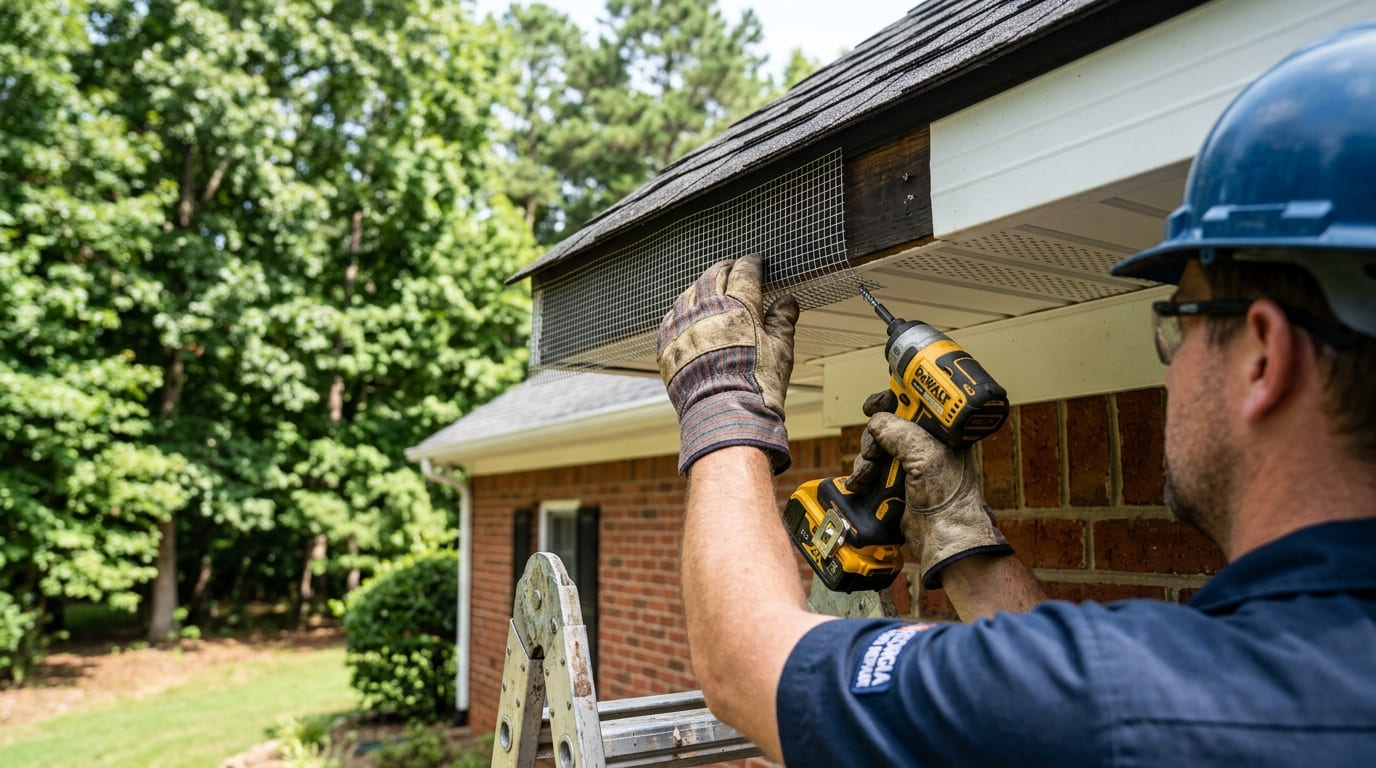
Wildlife exclusion focuses on permanently sealing and repairing the structural gaps in your roofline that allow animals to enter. The work is structural — replacing chewed or rotted soffit panels, sealing corner returns with galvanized mesh, installing metal drip edge at vulnerable transitions, and eliminating every gap in the eave system that an animal could use as an access point. No trapping. No chemicals. No extermination. Just a sealed, repaired roofline that denies access permanently.
This is different from what a pest control company does. Pest control treats infestations with chemicals or traps. Wildlife exclusion addresses the building itself — closing the structural openings that make your home vulnerable in the first place. For roofline wildlife problems in Washington, exclusion is both the more humane and the more permanent solution.
Washington's Common Roofline Wildlife
Washington supports a dense urban wildlife population across both sides of the Cascades. These are the species that most commonly exploit roofline gaps:
- Raccoons — the most structurally damaging species in Washington; strong enough to pry back softened soffit panels and physically enlarge gaps; most active from late winter through spring when females are seeking denning sites
- Gray squirrels — year-round nesters in western Washington; can fit through a gap the diameter of a quarter and will chew existing small gaps larger; primarily enter at corner returns and gable vents
- European starlings and house sparrows — cavity nesters that colonize any gap larger than 1.5 inches; nesting material creates fire hazards and their feces cause significant structural damage when colonies establish
- Little brown bats and big brown bats — can enter through a gap as small as 3/8 inch; Washington bat colonies roost in attic and eave cavities from spring through early fall; exclusion must be timed carefully around pupping season (June–July)
- Virginia opossums — increasingly common in western Washington; will use existing openings large enough for raccoons; primarily active November through March
Why All Entry Points Must Be Sealed in One Visit
A common mistake is addressing only the visible entry point — the hole you can see, the panel that's obviously chewed. Wildlife exclusion only works when every gap in the roofline system is closed in a single comprehensive visit.
Raccoons and squirrels don't have a single point of entry. They've typically identified multiple access options. When you close one gap without closing the others, the animals simply shift to the next opening. In some cases, sealing the primary entry without addressing secondary gaps actually traps animals inside, which creates a more serious problem.
Effective exclusion means the contractor goes up a ladder and inspects the entire eave perimeter — every corner return, every soffit-to-fascia junction, every gable vent, and every point where utilities enter the structure. Everything gets closed, everything gets checked.
Wildlife Exclusion Cost Ranges in Washington
| Job Type | Typical Range (Washington) |
|---|---|
| Entry point sealing only (1–3 gaps, mesh) | $250–$600 |
| Full perimeter exclusion sealing | $600–$1,500 |
| Add: soffit panel replacement (animal damage) | + $200–$700 |
| Add: fascia repair at entry points | + $300–$800 |