 The Function
 What Your Fascia Board Actually Does
The fascia is the vertical board that runs along the edge of your roofline, just below the first course of shingles. It's the board your gutters attach to. Fascia closes the end of the rafter tails, providing a finished edge that keeps water from running directly off the roof edge and into the wall below.
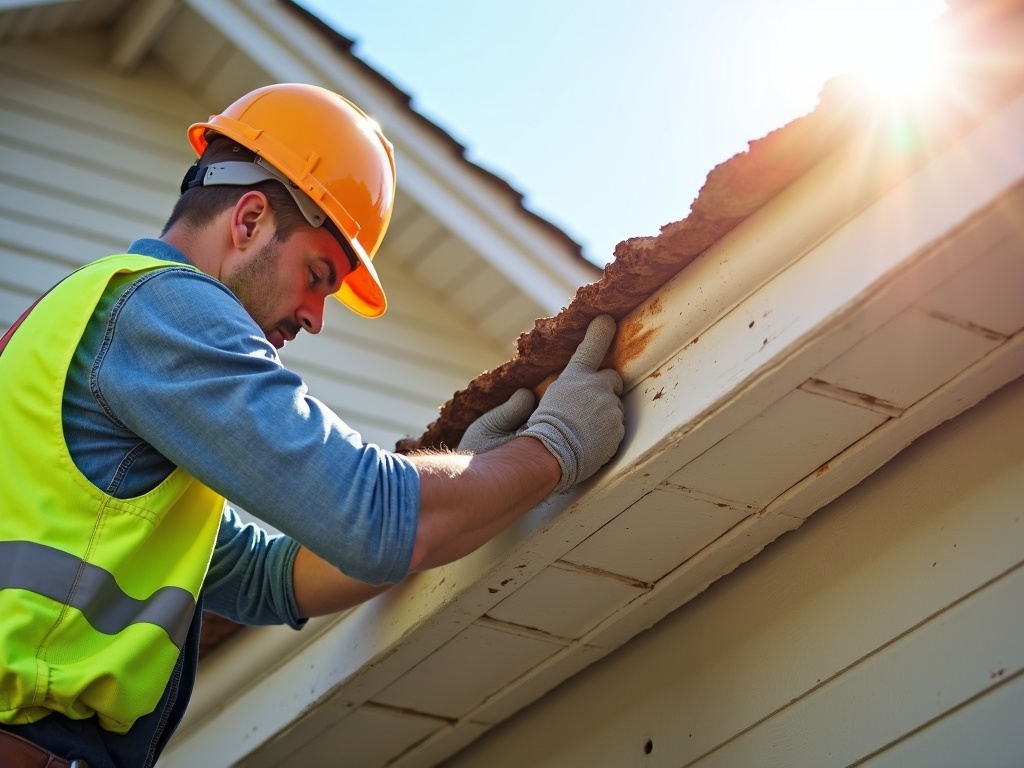
In Washington, the fascia faces constant moisture pressure from two directions: rainfall striking it directly during storms, and gutter overflow running down the face of the board when gutters clog with fir needles, leaf debris, or moss. Either pathway allows water to work into the wood grain over time. Once rot takes hold, it advances faster than most homeowners expect — what starts as surface discoloration can mean the board is soft and structurally compromised within one Washington rainy season.
The downstream consequences are significant. When fascia rots, gutter screws lose purchase in the softened wood and gutters begin to pull away from the house. The gap that opens between the gutter and the fascia sends roof runoff directly against the siding and into the wall cavity. And once the fascia is compromised, the rafter tails it was protecting are exposed to the same moisture.
Why Washington Fascia Fails Early
- Gutter overflow is the primary driver — a single clogged downspout on a western Washington home in November will send hundreds of gallons of water down the fascia face over the course of a single storm season
- Wood fascia boards are standard on pre-1990s construction — many Washington neighborhoods built in the 1970s and 1980s still have original wood fascia that's well past its moisture-resistant lifespan
- Inadequate painting schedules — wood fascia needs repainting every 4–6 years in Washington's UV and moisture environment; most homeowners let this go far longer, and once the paint barrier fails, rot follows within a season or two
- Improper gutter installation — gutters pitched too flat in Washington hold standing water at the back seam, which wicks into the fascia continuously even when gutters aren't overflowing
Signs Your Fascia Needs Repair
- Gutters pulling away or sagging from the roofline — the screws are no longer holding in the softened wood; the fascia behind them has rotted through
- Peeling paint on the fascia face — paint failure is the first visible sign of moisture saturation in the board; by the time paint peels, rot has usually already started below the surface
- Soft or spongy feel when you press on the board — if you can depress the fascia with your thumb from the ground or ladder, the board has lost structural integrity and needs replacement, not repair
- Water stains on the siding directly below the gutter — runoff escaping behind the gutter line from a failed fascia-to-gutter connection is running down the siding face
Fascia Repair Cost Ranges in Washington
| Job Type | Typical Range (Washington) |
|---|---|
| Spot section repair (6–10 linear feet) | $300–$650 |
| One full side of home (20–40 LF) | $700–$1,600 |
| Full perimeter replacement | $1,800–$4,800 |
| Add: rafter tail repair | + $400–$1,200 |
| Add: gutter re-hang or new gutter section | + $200–$600 |