Washington's Roofline Repair Specialists
Washington's rain, moss, and active wildlife population create roofline damage that compounds with every wet season. From rotted soffit to failing fascia to gutters pulling away to raccoons in your attic — one call covers all of it. Free inspection, no obligation.
Washington's Roofline Takes a Beating
Between the Pacific Northwest's relentless rainfall, moss buildup, freeze-thaw cycles in eastern and upland areas, and a wildlife population that treats every soffit gap as a real estate opportunity — Washington homeowners face roofline deterioration at a pace that surprises most people. Here's what's actually happening when your eaves show the first signs of trouble.
Soffit & Fascia
Soffit closes the gap between your roof's edge and your home's exterior wall. Fascia is the vertical board your gutters attach to. Together they form a sealed system that keeps moisture and animals out of your attic. When either fails — through rot, storm damage, or animal activity — both functions go with it.
Washington's moisture accelerates wood rot through a different mechanism than most homeowners expect. It's not just rain — it's the months-long sustained dampness that never fully dries out. A soffit panel that looks fine in October can be actively deteriorating from behind, invisible until it sags or an animal gets through.
Gutters & Wildlife
Gutters protect the fascia from Washington's persistent rainfall — when they clog with fir needles, maple seeds, or moss mats, that moisture goes straight into the fascia board. Overflowing gutters are the single most common cause of roofline rot in the Pacific Northwest. Gutter maintenance here isn't optional.
Washington's raccoons, gray squirrels, bats, and European starlings actively probe roofline gaps through every season. Raccoons in particular are strong enough to pull back a softened soffit panel. Once inside, wildlife damages insulation, chews wiring, and creates secondary entry points — all hidden until the repair bill is large.
Four Services, One Call
Soffit, fascia, gutters, and wildlife exclusion are interconnected — damage in one area almost always involves the others. We handle the full roofline system, not just the piece you can see.
Soffit Repair
Washington's persistent rain and freeze-thaw cycles rot soffit faster than homeowners expect. Sagging panels, animal entry holes, storm damage — we find the root cause and seal it before the next rainstorm makes it worse.
Learn MoreFascia Repair
Rotted fascia boards let gutters pull away and expose your rafters to Washington's relentless moisture. We replace damaged sections, address the source, and re-secure your gutter line in one visit.
Learn MoreGutter Repair & Guards
Western Washington gets 35–150 inches of rain annually depending on location. Clogged or failing gutters send all that water directly into your fascia and foundation. We repair the system and keep it clear.
Learn MoreWildlife Exclusion
Raccoons, squirrels, bats, and starlings exploit any gap in your roofline. We seal every entry point with permanent hard materials and repair the structural damage they leave behind.
Learn MoreThree Steps. No Runaround.
Getting your roofline repaired shouldn't be complicated. Here's what happens from your first call to completed work.
Call for Free Inspection
Call (855) 606-2187 and describe what you're seeing. A licensed Washington contractor in your area schedules a free on-site inspection — typically within 48 hours. No commitment required.
On-Site Assessment
The contractor inspects from ground level and from a ladder — examining the soffit, fascia, gutter line, and any suspected animal entry points. You get a clear written estimate before any work is discussed.
Professional Repair
Once you approve the estimate, the crew arrives on schedule and completes the repair cleanly. All work is warrantied, and cleanup is included. You don't pay until the job is done to your satisfaction.
What to Look for on Your Next Walk Around
Most Washington homeowners notice roofline damage either after a heavy windstorm or when something falls — a piece of soffit on the ground, a gutter section hanging loose, or the sound of something scratching inside the eaves at night. These are the earlier signals to check for before it reaches that stage:
- Soffit panels that sag, bow, or have visible gaps — especially at corners and returns where moisture concentrates during long Pacific Northwest wet seasons
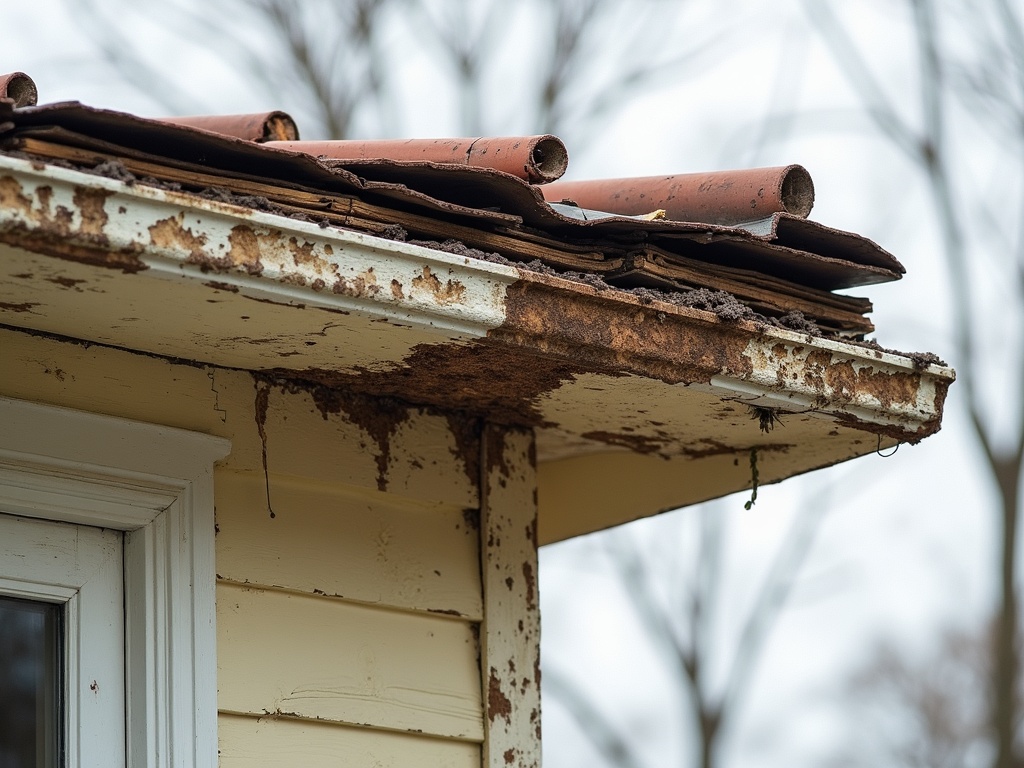
- Peeling paint or dark staining on the fascia board — in Washington this almost always means an overflowing gutter above has been sending water down the fascia face for months
- Gutters pulling away from the roofline — the screws are losing purchase because the fascia board behind them has rotted through from sustained moisture exposure
- Holes, chewed edges, or gaps in soffit panels — raccoons, squirrels, and starlings find soft wood fast; a small opening becomes full attic access quickly in Washington's active wildlife environment
- Scratching, rustling, or chattering sounds near the eaves — wildlife is inside your roofline; the entry point needs to be found and sealed before nesting begins
- Water stains on ceilings near exterior walls — often a roofline leak, not the roof itself; water enters at the eave and travels along framing before showing up at the ceiling
Which Service Does Your Home Need?
Tell us what you're dealing with and we'll connect you with a licensed Washington professional for a free on-site inspection.
Trusted by Washington Homeowners
"We had raccoons getting into the eaves for two winters before we finally called. The inspector found three separate entry points — we only knew about one. He replaced the chewed soffit sections, sealed everything with galvanized mesh, and reinforced the corner returns where they'd been prying. Haven't heard a thing since. Worth every dollar."
"Our gutters had been pulling away from the house for about a year and we kept putting it off. The inspector found the fascia behind them was completely rotted from water sitting behind a clogged gutter — 18 feet of it. They replaced the fascia, re-hung the gutters properly, and put guards on while they were up there. Fixed the actual problem, not just the symptom."
"A windstorm took out a full section of soffit on the north side of our house. I called three companies before I found someone who could actually schedule within a week during our rainy season. These folks had a contractor out in two days, wrote up a clear estimate on the spot, and completed the repair the next morning. Matched our existing aluminum perfectly."
Serving Homeowners Across All of Washington
From the Seattle metro and the Puget Sound corridor to the Cascade foothills, the Olympic Peninsula, and the drier eastern Washington cities — roofline damage happens statewide, and we connect homeowners with licensed local contractors across Washington.
The highest call volume comes from western Washington's suburban neighborhoods, where a large stock of 1970s–2000s homes is hitting the age where wood soffit, aging fascia, and original gutters all need professional attention — and where moss, fir needle buildup, and year-round dampness accelerate that timeline significantly.
- Seattle, WA
- Bellevue, WA
- Tacoma, WA
- Everett, WA
- Spokane, WA
- Olympia, WA
- Kirkland, WA
- Marysville, WA
Licensed local contractors covering the full state — from the Puget Sound to the Tri-Cities to the Olympic Peninsula. Call for a free inspection near you.
(855) 606-2187What Washington homeowners ask before calling
Honest answers about roofline repair — what it costs, how urgent it is, and what to expect from the inspection process.
Call (855) 606-2187How much does soffit and fascia repair cost in Washington?
Spot repairs for isolated damage typically run $250–$850. A full fascia replacement on one side of a two-story Washington home runs $1,800–$4,800 depending on linear footage and material. Washington labor markets vary significantly between the Puget Sound metro and eastern WA — every estimate is free, in-person, and itemized. We don't quote sight-unseen.
Is wildlife exclusion different from pest control?
Completely different. Wildlife exclusion focuses on sealing and repairing the structural gaps that allow animals to enter — using hard materials like galvanized mesh, aluminum flashing, caulk, and replacement panels to permanently block entry points. No chemicals, no trapping, no extermination. The goal is a sealed roofline that denies access permanently.
How soon can someone come out?
Most inspections schedule within 24–48 hours. If you have active animal entry, open structural damage after a windstorm, or visible water intrusion during the rainy season, mention it when you call — urgent situations are prioritized. Call (855) 606-2187 to schedule.
Will storm damage to my soffit or fascia be covered by homeowner's insurance?
Wind and falling tree limb damage are commonly covered under standard Washington homeowner's policies. Contractors document all storm damage with photos and provide a written assessment that supports a claim. General deterioration from moisture, moss, or deferred maintenance is typically not covered. Call first — the inspector can tell you whether the cause is typically insurable before you file.
Do gutter guards work in the Pacific Northwest with all the fir needles and maple seeds?
The right guard product does, yes. Micro-mesh guards with a fine stainless steel screen handle the Pacific Northwest's debris mix — fir needles, maple helicopters, cottonwood fluff — better than traditional screens or reverse-curve designs. The contractor will assess your specific tree canopy and recommend a product suited to your actual debris load, not just a generic upsell.
My soffit looks okay from the ground but I'm hearing sounds in the eaves. Should I call?
Yes — call. Washington raccoons and squirrels frequently enter at corner returns, gable vents, or the junction between soffit and fascia, all of which are invisible from ground level. The inspector goes up a ladder and checks the full perimeter. An inspection costs nothing and takes about 20 minutes.