 The Function
 What Your Soffit Actually Does
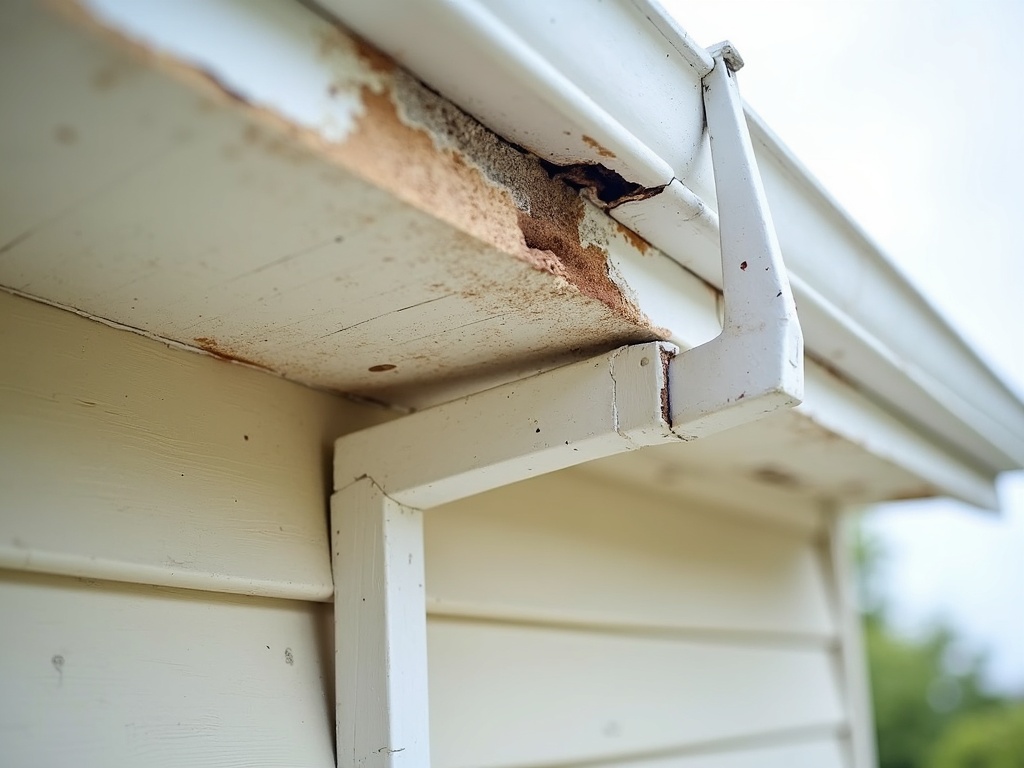
Soffit is the horizontal panel running along the underside of your roof overhang — the surface you see when you stand at the edge of your home and look up toward the eaves. It closes the gap between the fascia board at the roof's edge and the exterior wall, sealing that cavity from the outside world.
In Washington's climate, soffit carries a heavier workload than it does in drier states. It keeps moisture out of the eave cavity during the Pacific Northwest's months-long rainy season. It prevents the raccoons, gray squirrels, European starlings, and bats common throughout western and eastern Washington from establishing themselves inside your attic. And for homes with vented soffit panels, it provides the air intake that makes your attic ventilation work — drawing outside air up under the roof deck to reduce heat buildup and prevent the condensation that drives attic mold in Washington's humid environment.
When soffit fails — through rot, wind damage, or animal activity — all three functions stop working simultaneously. The gap that results becomes a moisture channel and an open invitation for whatever wildlife is looking for shelter that season.
Why Washington Accelerates Soffit Deterioration
Washington's marine and continental climates create soffit problems through mechanisms that don't exist in drier regions:
- Sustained moisture exposure — western Washington's rainy season can run October through April without a significant dry period; wood soffit absorbs moisture continuously and never fully dries out
- Moss and organic debris accumulation — Washington's damp conditions support moss growth on and around soffit panels; moss mats hold moisture against the panel surface and accelerate rot from the outside in
- Fir needle and leaf debris in gutters — clogged gutters overflow directly onto fascia and into the eave cavity, the leading cause of soffit rot in PNW neighborhoods with significant tree canopy
- Raccoon and squirrel pressure — Washington's urban wildlife population is dense; raccoons are strong enough to pull back weakened panels, and squirrels exploit any gap within hours of it opening
- Older cedar construction — many Washington homes built before 1990 have wood or cedar soffit that is now well past its serviceable lifespan in the PNW's moisture environment
Signs Your Soffit Needs Repair
Walk the perimeter of your home and look up at the eave line. These are the warning signs requiring professional attention:
- Panels sagging, bowing, or separating from the fascia — the nailing channel has likely rotted through; the panel has lost its structural support
- Dark staining or moisture marks along panel seams — discoloration following panel joints indicates active moisture penetration, not just surface dirt
- Holes, chewed edges, or missing sections — a quarter-sized gap is enough for a squirrel; raccoons create larger entry points through weakened panels
- Peeling paint on wood soffit panels — paint failure almost always means moisture is trapped beneath the surface; the board is deteriorating from the inside
- Water stains on ceilings near exterior walls — water entering through a soffit gap travels along the rafter line before appearing at the ceiling, often far from the entry point
- Scratching, rustling, or chattering from the eaves — animals are using your soffit as access and may already be nesting in the eave cavity or attic
How a Professional Soffit Repair Works
A proper repair involves more than pulling out the damaged panel and nailing in a replacement. Contractors approach every job in sequence:
- Full eave inspection from a ladder: The damaged area is never assessed in isolation. The contractor examines the surrounding panels, the fascia board, the gutter line, and the framing visible from below. Problems in one area almost always have a related cause nearby.
- Root cause identification: Was this caused by an overflowing gutter? A windstorm? Animal entry? Fixing the panel without addressing the cause produces a repeat job in six to twelve months.
- Framing assessment: The lookout boards and nailing channel behind the soffit panels are checked for rot before new panels are installed. New soffit over deteriorated framing is guaranteed to fail again.
- Material matching: Replacement panels are sourced to match your existing soffit profile, material, and color. Aluminum panels in the correct profile are almost always in stock. For older vinyl profiles, a parts search happens before work begins.
- Installation and sealing: New panels are fitted, secured, and sealed at all seams. Vented sections are positioned correctly to maintain attic airflow.
- Adjacent entry point sealing: For animal-related repairs, all surrounding gaps — not just the visible entry — are sealed before the job is closed out.
Soffit Repair Cost Ranges in Washington
Pricing depends on damage square footage, material type, and structural work required behind the panels:
| Job Type | Typical Range (Washington) |
|---|---|
| Small animal entry hole or gap (1–3 panels) | $150–$400 |
| Storm-damaged section (10–20 linear feet) | $350–$750 |
| Full run on one side of home (25–45 LF) | $650–$1,400 |
| Add: framing repair (lookout boards/nailing channel) | + $300–$800 |
| Add: wildlife exclusion sealing | + $150–$500 |
Note: These ranges reflect Washington labor and material rates. Puget Sound metro pricing typically runs higher than eastern Washington. Your written estimate will be itemized and specific to your home. The inspection is always free.
Soffit Material Options for Washington Homes
Aluminum soffit is the standard choice for Washington repairs and replacements. It handles moisture without rotting, doesn't support moss growth the way wood does, and is available in solid and vented profiles. Most homes built after 1985 in Washington already have aluminum soffit — matching it is straightforward.
Vinyl soffit costs less than aluminum and never needs painting. Performance in Washington's climate is generally good given the mild temperature range in western WA. For eastern Washington where temperature swings are more extreme, aluminum holds up better long-term.
Wood soffit persists on older Washington homes — particularly cedar-sided homes common in the Pacific Northwest. When it deteriorates, most contractors recommend converting to aluminum rather than replacing in kind. The ongoing moisture management required to maintain wood soffit in Washington's environment is difficult to justify for most homeowners.